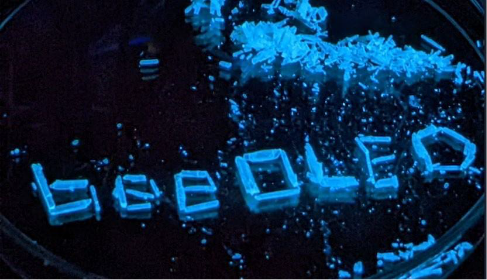
The Dresden-based start-up beeOLED is tackling what has long been considered an insurmountable bottleneck in OLED technology: a blue emitter that is both efficient and long-lasting. A new organometallic material is paving the way for large OLED displays – and could open up a market worth billions.
Solving the last major remaining problem with OLEDs – with this goal in mind, Dr Carsten Rothe, now CTO, and Dr Volodymyr Senkovsky, now COO, founded beeOLED in 2020. In themselves, OLEDs have made astonishing progress over the past few years. Whilst they initially faced many challenges, particularly regarding long-term stability, these have all been satisfactorily resolved over time. OLEDs have improved so rapidly that alternative technologies, foremost among them MicroLEDs, have repeatedly been left behind – especially since one of their most important advocates for many years, Apple, has dropped out.
The Dresden-based start-up beeOLED is tackling what has long been considered an insurmountable bottleneck in OLED technology: a blue emitter that is both efficient and long-lasting. A new organometallic material is paving the way for large OLED displays – and could open up a market worth billions.
Solving the last major remaining problem with OLEDs – with this goal in mind, Dr Carsten Rothe, now CTO, and Dr Volodymyr Senkovsky, now COO, founded beeOLED in 2020. In themselves, OLEDs have made astonishing progress over the past few years. Whilst they initially faced many challenges, particularly regarding long-term stability, these have all been satisfactorily resolved over time. OLEDs have improved so rapidly that alternative technologies, foremost among them MicroLEDs, have repeatedly been left behind – especially since one of their most important advocates for many years, Apple, has dropped out.